If you’re planning a talk, panel, or all-hands and you’ve got AV hire, PA system setup, and wireless microphone options on the table, one question always pops up: Which mic should we choose—lapel, headset, or handheld?
Short answer: it depends on the presenter, the room, and the format. Long answer: let’s break down the pros and cons from both a sound engineer’s perspective and the audience experience, plus quick coaching tips so your speakers sound great the first time.
The Quick Comparison
| Mic type | Best for | Strengths | Watch-outs |
|---|---|---|---|
| Lapel (Lavalier) | Presenters who need hands free and minimal visual impact | Discreet, keeps hands free, predictable position | Lower gain before feedback, picks up room noise, can rub on clothing |
| Headset | Live talks with movement or quieter voices | Highest gain before feedback, consistent level, minimal spill | Visible on face, needs correct fit |
| Handheld | Q&A, hosts, confident speakers | Excellent control, great rejection of noise, easy to pass around | Needs good mic technique; hands not free |
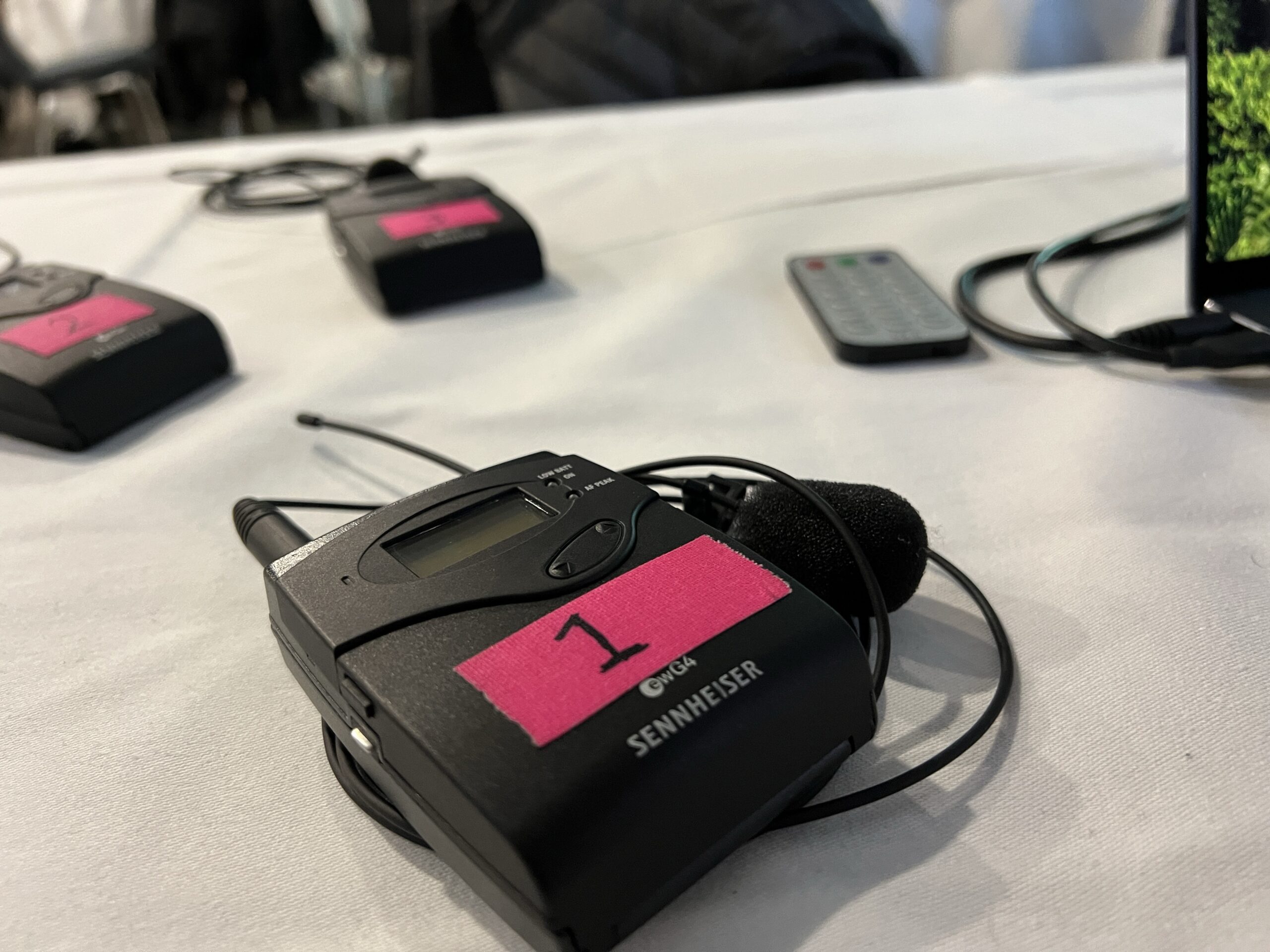
Lapel (Lavalier) Microphones
Why presenters like them
They’re tiny and discreet. Great when you want a clean look on stage or on camera. Presenters can gesture freely and hold notes or clickers.
From a sound engineer’s perspective
-
Gain before feedback: Lower than headsets or handhelds. A lapel sits farther from the mouth, so we need more system gain, which eats into your feedback margin-especially in reflective rooms or when speakers stand in front of the PA.
-
Consistency: The level can drift as the person turns their head or leans away.
-
Noise & rustle: Clothing friction, long hair, scarves, and lanyards can tickle the capsule and add unwanted noise.
-
RF & placement: Wireless lapels are convenient but require solid frequency coordination (for radio mic setups) and careful positioning-about a handspan below the chin is a good starting point.
How the audience experiences it
When set up well, a lapel sounds natural and conversational. In tricky rooms, though, you may hear more room reverberation, and level can dip when the presenter looks away.
-
Clip mid-chest, around a handspan under the chin; avoid jackets rubbing the capsule.
-
Ask presenters to project clearly and avoid touching the mic or cable.
-
Keep lanyards, scarves, and hair away from the mic head.
-
If possible, keep presenters behind the PA speakers to help feedback control.

Headset Microphones
Why presenters like them
They’re hands-free like a lapel but track the mouth wherever the head turns. Great for trainers, keynotes, fitness instructors, and anyone who moves a lot.
From a sound engineer’s perspective
-
Gain before feedback: Best of the three. The capsule sits close to the mouth (typically at the corner of the lip), so you need less system gain and have more headroom before feedback.
-
Consistency: Very stable level – head turns don’t change the sound as much.
-
Spill rejection: Better isolation from PA and stage noise, which helps in lively rooms.
-
Fit matters: Correctly placed boom (just off the lip, not touching) and a snug, comfortable frame are key. We carry multiple ear-hook sizes for this reason.
How the audience experiences it
Clear, steady, and intelligible – even when the presenter is animated. This is usually the safest choice when speech clarity is mission-critical.
Coaching tips for headsets
-
Position the capsule at the corner of the mouth, 1–2cm away; never directly in front to avoid breath pops.
-
Check for glasses, masks, or earrings that might clash with the boom.
-
Remind presenters to speak at a natural, confident level – no need to shout.

Handheld Microphones
Why presenters like them
They feel powerful and familiar. Handhelds are perfect for hosts, Q&A, panels, and anyone comfortable holding a mic. They’re also fast to deploy and swap.
From a sound engineer’s perspective
-
Gain before feedback: Very strong – if the mic is held close. Directional handhelds reject background noise well.
-
Control: The operator and presenter can instantly mute, pass to another speaker, or adjust distance.
-
Technique-sensitive: Big swings in volume happen if the mic drifts away from the mouth.
-
Handling noise: Modern capsules are good, but fidgeting still transfers as thumps and bumps.
How the audience experiences it
When held correctly (5-10cm from the lips), speech is punchy and intelligible with good rejection of room noise. When held at chest height, intelligibility drops fast.
Coaching tips for handhelds
-
“Mic to the mouth, not the chest.” Aim 5-10cm away, pointing at the lips.
-
Speak up, but don’t shout. Let the mic do the work.
-
For Q&A, pass the mic to the person speaking; don’t “hold it between” two people.
-
Avoid cupping the grille-it changes the sound and increases feedback risk.
Choosing for Different Scenarios
-
Keynote or training in a lively room: Go headset. You’ll get strong gain before feedback, consistent level, and fewer surprises if the presenter moves.
-
Panel discussion with audience Q&A: Use handhelds for panelists and a roving handheld for questions. If panelists need hands free and are relatively static, lapels can work – just be mindful of room acoustics.
-
Recorded video with minimal visual impact: Lapel looks tidy on camera. Consider a second backup mic (like a hidden recorder) if the content is critical.
-
Soft-spoken presenter or heavy movement: Headset wins; it keeps clarity without cranking the PA.
-
Town hall with multiple contributors: Mix of handhelds (for spontaneity) and one headset for the main host works well.

Gain Before Feedback: Why It Matters
Gain before feedback is how loud the mic can get before the room starts to ring. It’s influenced by:
-
Mic-to-mouth distance (closer is better),
-
Speaker placement vs. mic (stay behind the PA),
-
Mic pattern (directional capsules help), and
-
Room acoustics (hard, reflective spaces are tougher).
Headsets typically give you the most headroom, handhelds are close behind (when used close), and lapels offer the least.
Teaching People to Use Mics (Fast)
When you’ve got a queue of speakers, you need instructions that stick. Here’s a simple script you can use backstage or at the lectern:
General (applies to all)
-
“Speak clearly and at a steady pace. The sound team will handle volume.”
-
“Face the audience when you talk.”
-
“If you hear ringing, don’t move in front of the speakers-step back.”
Lapel
-
“Try not to touch the mic or your clothing where it’s clipped.”
-
“If you turn your head a lot, project a touch more to keep the level even.”
Headset
-
“We’ve set the boom by the corner of your mouth-please don’t adjust it.”
-
“Normal speaking voice is perfect.”
Handheld
-
“Hold it like an ice-cream cone-5-10cm from your lips, pointing at your mouth.”
-
“If someone else speaks, pass them the mic.”
Practical Add-Ons That Make a Big Difference
-
Spare batteries & fresh RF scan: For wireless microphone reliability, we always start with new batteries and clean frequencies.
-
Windscreens & pop filters: Reduce breath pops and help hygiene for multi-user handhelds.
-
Monitors & PA placement: Keep speakers in front of microphones and aim PA away from lecterns to reduce feedback risk.
-
Soundcheck with real speech: Not “check one two”-have presenters say a few lines from their talk so compression and EQ match reality.
So…Which Should You Use?
-
If clarity and control are top priority: Headset.
-
If you want flexibility and easy Q&A: Handheld.
-
If you want the least visual impact and a tidy look on camera: Lapel (with careful setup).
Still unsure? Tell us about your room, audience size, and format, and we’ll recommend the right PA system, mic capsules, and radio mic channels to match.
Ready to plan your audio?
AVE Services can supply complete AV hire, PA system design, wireless microphone packages, and conference equipment with on-site engineers to keep things smooth from start to finish.
Can we help with your next idea? Don’t hesitate to reach out to our team to discuss your needs and find the best solution for you.